august long redux (found on roadside edition)

There was more to the August long weekend than I let on here.

Part of the 1,200km of driving was a 10-hour trip within the trip, to visit an aunt and uncle in Saskatchewan for a celebration of their 50th wedding anniversary. As my uncle mentioned in his speech, it’s not very often we see an anniversary of 50 years, but it’s even less often that a parent of one of the celebrants is alive to see it; his mother is still alive and kicking at 107 years old.

According to Statistics Canada she has already lived three-quarters longer than the life expectancy for a woman born in 1908. Statistically most of her peer group wouldn’t even have lived to see my uncle’s fifth wedding anniversary.

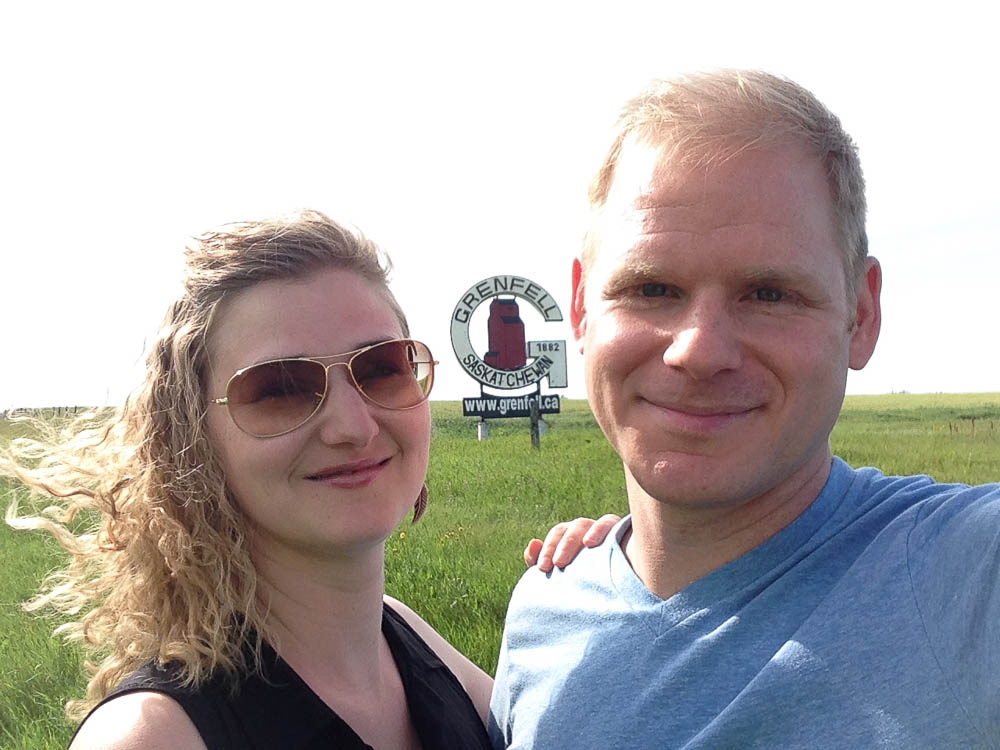
Along the way to the party we decided to selfie-document the trip:

Hour 0: Welcome to Saskatchewan. Watch out for fire-farting birds.


Grenfell
Hour 2: Grenfell. Land of…well, land.


Hour 10: Back in Manitoba. Someone was sleeping in the car…

.:.

Another roadside attraction encountered was the field of sunflowers in all their beauty, and while not as breathtaking, I also took a much more interesting photo of them.

This is with the same camera, #nofilter:

Sunflowers, 1970's style

I love it because it inexplicably feels like a grainy Polaroid from the 1970’s. Just as the other sunflower photo, this was taken with my iPhone, within a meter or two of the other location.

To get the same feel with my Pentax, I had to tweak some of the lighting in post-production, but here’s my attempt at retro bad photography:

sunflowers, aged
sunflowers, aged

I actually like it because it has similar (though more vibrant) colour, but it doesn’t have the grainy blur that the pixelation gave the other one.

And to prove I didn’t just travel back in time to get 70’s light everywhere, here’s the before and after of my modified photo:

sunflowers, before and after

.:.

The chickens are now safely in our freezer. Plenty of feet, liver, and meat to take us into winter.

We also got a handful of gizzards in the mix, which Kelly made up popcorn chicken style (along with popcorn olives and yams). Yum! It was the first time we’d had gizzard, and based on the prep necessary, probably the last. But if you’re looking for a good way to prepare chicken gizzard (or probably anything, really), try battering and deep frying.

the media game

You might not know the names, but the story is universal.

In an eight-minute segment, ABC’s Media Watch deconstructs how reporting on Twitter rumours and the subsequent denials actually affects the ability of governments to govern.

This isn’t advocating for not reporting on news breaking on Twitter, but like all reporting, it needs to be responsibly done.

When the story is actually that a journalist’s claims have been proven wrong by the laws of space and time, that’s as far as the story should go:

Ben Fordham, popular afternoon radio host on 2GB, and former presenter on Channel 9’s Today show, made an unsubstantiated claim on Twitter today in an apparent attempt to stir up the political troubles surrounding Prime Minister Tony Abbot’s leadership. Fordham’s specific claim was promptly and irrefutably proven incorrect by all parties in the claim.

In light of this, this network will apply greater scrutiny to claims from unnamed sources put forth in Mr. Fordham’s future reporting, before we bring those stories to you.

In other news…

Maybe there was some merit to this story — maybe the meeting was over the phone, or text, or they made plans to meet a different day.

Even if that turns out to be the case, it doesn’t vindicate anyone.

Asking “what if” and connecting the dots between allegations, denials, and evidence is part of a reporter’s job, to be sure. But if that’s the whole of the story, then all we’re really doing is watching an episode of How It’s Made where the widget actually failed all the quality measures and never made it through the assembly line. And then happily forking over our money to buy one.

the human 30%

The New Yorker has a piece on how Netflix relies on the human gut working alongside their trove of customer data to determine what shows will be a success.

“It is important to know which data to ignore,” he conceded, before saying, at the end, “In practice, its probably a seventy-thirty mix.” But which is the seventy and which is the thirty? “Seventy is the data, and thirty is judgment,” he told me later. Then he paused, and said, “But the thirty needs to be on top, if that makes sense.”
— Ted Sarandos, Chief Content Officer, Netflix

It’s a nice tempering to the battle cry of “Big Data!” everywhere, and encouraging to hear someone speak up on the role of human intuition in the age of the algorithm.

I was reminded of the partnership (and probably conflict) between these elements when, earlier this evening, Netflix recommended a few movies in Tyler Perry’s Madea franchise under the section “Movies Featuring a Strong Female Lead”.

netflix-algorithm

While the New Yorker piece was looking at the curating of content, not the recommendation algorithms, I can’t help but question if an algorithm or a human categorized the Madea films.

At first I took it as a failure of the algorithm, but on second thought, this feels more human than machine. To a machine, it would be obvious that Tyler Perry is a man and that the top-billed actors in this movie are men. Categorizing films based on gender of the lead would be a non-ambiguous task when working solely with data. The soft-categorization of this feels like something a human would do after asking “well where else are we supposed to put this?” On the other hand, a very human decision would be to say “there’s no way we can call this a female lead”.

And maybe that’s the most confounding thing about it — that it’s hard to say either way if it was a human or machine decision that put Madea in my recommendations.